The United States faces a critical test in addressing supply-chain fragility and inflation, requiring renewed investment in its own strength through railroads. Trucking dominates U.S. freight, offering flexibility but at a steep cost in lives and highway damage. Railroads, by contrast, build and maintain their own infrastructure, reinvesting billions each year without federal subsidies, moving more goods with less fuel, and emitting fewer pollutants.
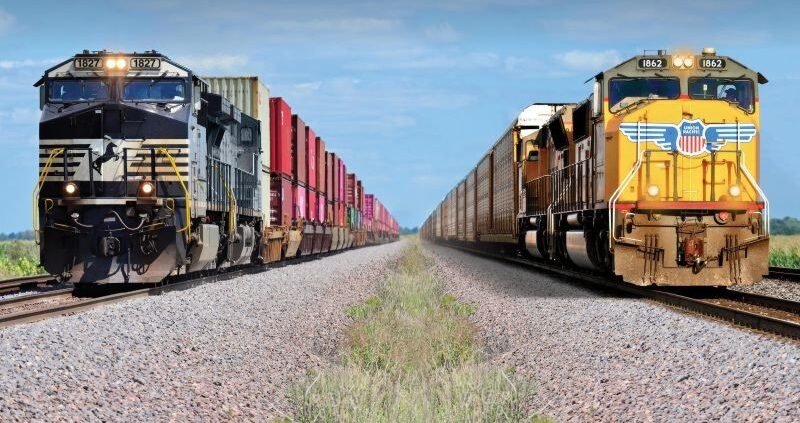
The proposed merger of Union Pacific and Norfolk Southern, announced in July, offers the opportunity to create America’s first coast-to-coast rail network under a single U.S. carrier, spanning more than 50,000 route miles and linking 100 ports across 43 states. A unified system means fewer handoffs between fragmented regional networks, faster delivery, and lower costs. Streamlined routes would eliminate bureaucratic friction that slows commerce and adds uncertainty to shipping. For farmers, manufacturers, and consumers, this translates into stronger supply chains, lower prices, and renewed confidence in the American economy.
Freight could move directly from origin to destination without costly delays. Lower transportation costs in agriculture, manufacturing, housing, and retail would ripple through the economy, easing inflation and boosting competitiveness for U.S. producers. The merger also complements the Trump administration’s effort to reshore manufacturing and rebuild domestic supply chains, giving U.S. manufacturers cheaper, more reliable routes for sourcing materials and delivering finished goods.
Expanded rail operations would protect and grow good-paying union jobs in an industry that has powered America’s growth for more than a century. These are stable careers with benefits — the kind of work that anchors communities and sustains middle-class families. Critics of rail mergers often warn of reduced competition or service quality, but the overlap between Union Pacific and Norfolk Southern is minimal. Rather than suppressing competition, the merger would strengthen it by enabling U.S. carriers to compete more effectively against trucking, air freight, and Canadian railroads — which have enjoyed uninterrupted transcontinental systems for decades.
The proposed Union Pacific-Norfolk Southern merger represents a similar moment of promise. By creating the first true coast-to-coast rail network in U.S. history, this partnership could help reshore manufacturing, fortify supply chains, and make American transportation safer and more efficient. Rebuilding American prosperity begins with reconnecting America itself. The next great chapter of that story could once again be written on steel rails.
Dr. Nam Pham is the managing partner at NDP Analytics, an economic and communications research firm, and an adjunct professor at the George Washington University School of Business.