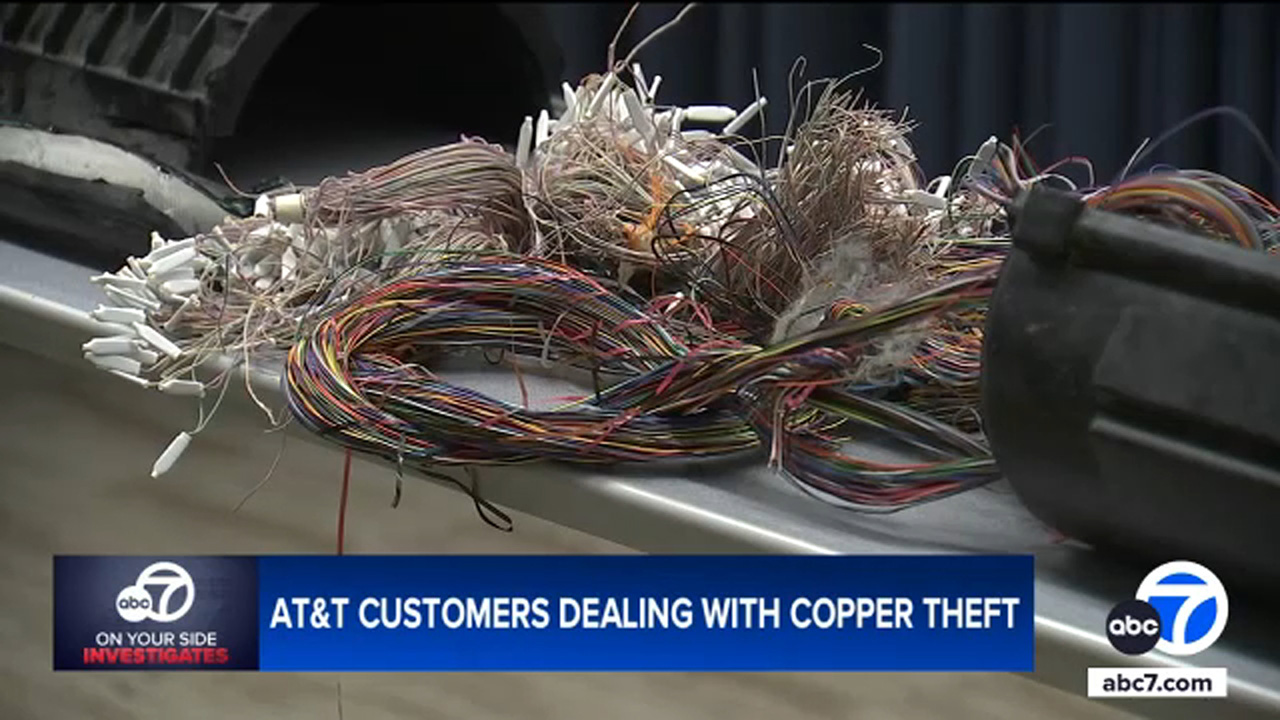
Cable and copper wire thefts have doubled in a year, leaving hospitals, emergency services, and critical systems vulnerable. Imagine calling 911 and no one answers. A hospital loses internet access mid-surgery while treating a patient. You cannot work, reach your doctor, or access your bank—all because thieves ripped copper wiring from the ground to sell for scrap. These are not hypothetical scenarios but real incidents unfolding across the United States. Recent weeks have seen 5,500 streetlights go dark in Tucson, Denver’s A-Line train shut down, and $1.25 million in losses in Bakersfield, California, where wiring from electric-vehicle charging stations was stolen.
Broadband infrastructure is a lifeline for daily American life. Its protection is not a corporate concern but a consumer imperative. The crisis is escalating: two reports reveal a sharp rise in theft and vandalism targeting America’s broadband and wireless networks. Between June 2024 and June 2025, over 15,000 incidents disrupted service for more than 9.5 million customers nationwide. In the first half of 2025 alone, incidents nearly doubled compared to the previous six months. Hospitals, schools, 911 dispatch centers, and military bases have all been targeted, exposing a growing national vulnerability.
The cost of stolen wire pales in comparison to the damage inflicted. Between June and December 2024, theft-related outages cost society between $38 million and $188 million in losses. California and Texas suffered the largest financial hits—$29.3 million and $18.1 million respectively—while smaller states like Kentucky also faced millions in damages. Each severed cable creates a ripple effect, silencing entire communities.
These are not isolated acts of desperation but organized, strategic crimes. Thieves target specific copper or fiber-optic lines, while others accidentally destroy fiber cables, assuming they contain metal. The outcome is chaos, financial loss, and danger. Consumers bear the burden as 911 access falters, small businesses stall, and healthcare, banking, and remote work systems collapse. Broadband expansion in rural and underserved areas has slowed dramatically.
Some attacks are severe enough to be classified as potential domestic terrorism. Charter Communications reported a 200% spike in felony attacks on its Missouri fiber network this year. In Van Nuys, California, vandals cut 13 fiber lines in one night, disabling 911 dispatch, a military base, and hospitals for 30 hours. These were coordinated strikes endangering lives.
Businesses, taxpayers, and consumers have invested billions to build these networks. Allowing criminals to dismantle them for scrap is unacceptable. Yet current federal law fails to treat broadband destruction as seriously as attacks on pipelines, railways, or power grids. In many states, penalties are outdated or nonexistent, effectively enabling vandals to cripple critical systems.
Congress has begun addressing the issue. Reps. Laurel Lee (R-Fla.) and Marc Veasey (D-Texas) introduced H.R. 2784, the bipartisan Stopping the Theft and Destruction of Broadband Act. The bill would criminalize broadband infrastructure destruction, equipping law enforcement with tools to act. Adding broadband systems to protected critical assets under Title 18 of the U.S. Code would signal that such acts are sabotage, not scavenging.
States like Florida, South Carolina, and North Carolina have already taken steps to deter these crimes. Congress must follow suit. Broadband is a digital lifeline for daily American life. Protecting it is a consumer issue, not a corporate one. Americans should not live in fear of losing their connection when they need it most.
Matthew Kandrach is the president of Consumer Action for a Strong Economy, a nonpartisan, nonprofit consumer advocacy organization.