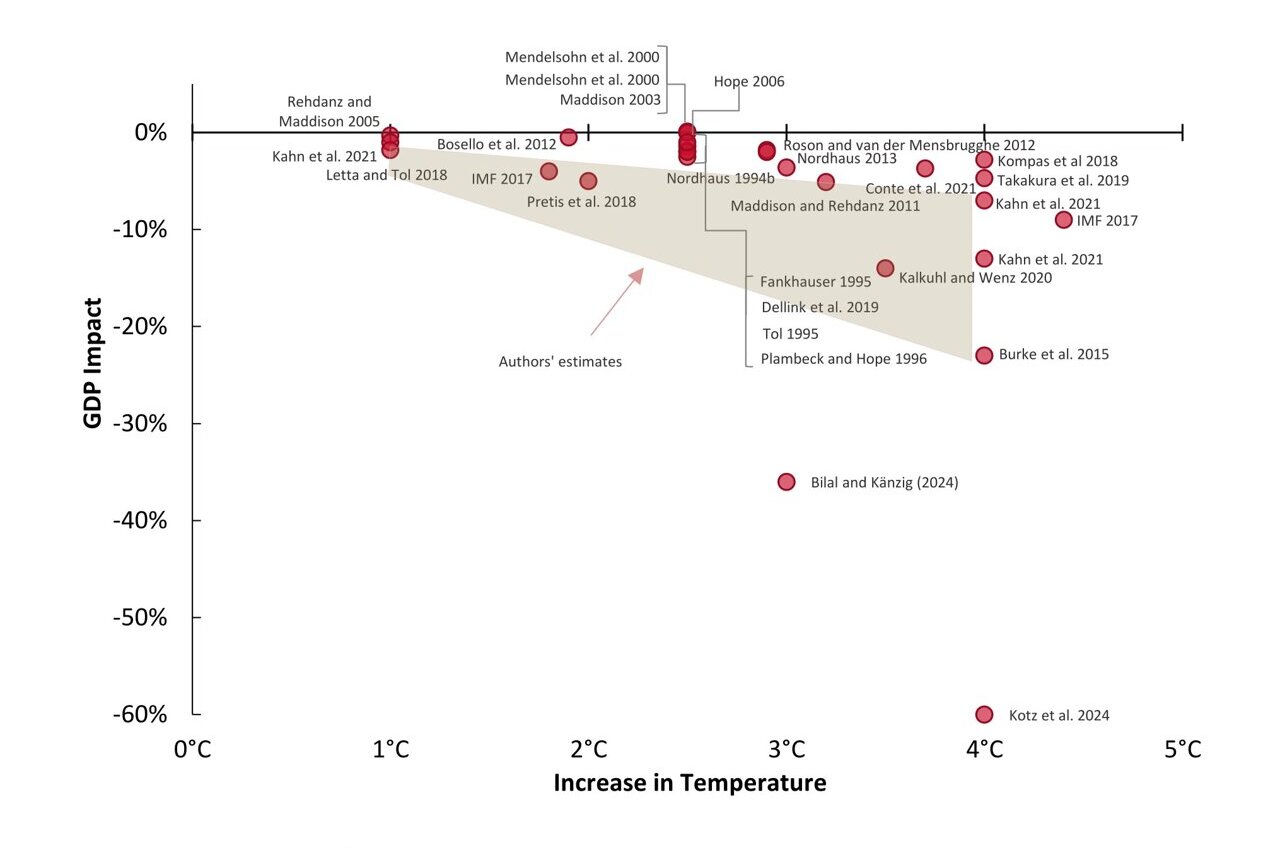
A study published last year in Nature claimed climate change would reduce global GDP by up to 60% by 2100, even with drastic emission cuts.
However, this prominent projection was recently retracted. The Potsdam Institute for Climate Impact Research researchers admitted their findings were highly sensitive to questionable economic data from Uzbekistan included in the underlying dataset.
American economists pointed out a major flaw: GDP data anomalies stemming from Uzbekistan “substantially bias predicted impacts of climate change.” When these outliers are excluded, the projected global GDP loss by 2100 drops dramatically, aligning much more closely with previous estimates. Leonie Wenz, lead scientist on the original study, previously suggested adaptation efforts and immediate emission reductions to prevent greater economic losses later.
The retraction notice states that correcting data inaccuracies or making other adjustments “led to discrepancies in the estimates for climate damages by mid-century” significantly reducing confidence in the findings beyond a certain point. The corrected projections showed an increased uncertainty range (from 11-29% to 6-31%) relative to the original flawed estimate.
This study, initially hyping near-total economic collapse as early as April 2024, now stands discredited by its authors after peer review flagged fundamental errors.