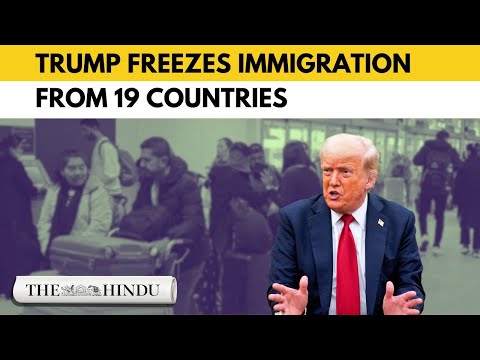
President Trump announced plans for a broad pause on visa processing from individuals from specific nations, aiming to address concerns over national security amid recent incidents of attacks linked to migration.
The move follows the November attack at an Ohio mosque where five people were killed. In response, officials cited heightened risks from nationals in certain countries. The administration is considering expanding existing travel restrictions, which already include full entry bans on individuals from Afghanistan, Burma, Chad, the Republic of Congo, Equatorial Guinea, Eritrea, Haiti, Iran, Libya, Somalia, Sudan, and Yemen.
The proposed additions to the ban would implement a partial or conditional suspension for nationals from Burundi, Cuba, Laos, Sierra Leone, and Turkmenistan. This brings the total number of nations subject to entry restrictions under the executive order to 19 countries.
Critics argue that this measure excludes significant sending countries like Bangladesh, Egypt, Jordan, Turkey, Lebanon, Saudi Arabia, and Iraq. According to available data, these targeted countries represent only a fraction of Muslim immigration, accounting for 27% in 2023 and 18% over the past decade.
The policy change raises questions about the effectiveness of vetting processes across different regions. While many high-risk individuals may undergo security checks, officials note that radicalization doesn’t always align with government assessments. This is illustrated by cases like that of a Saudi national who was granted temporary military training access in the U.S., despite concerns over his home country’s internal dynamics.
Furthermore, analysts suggest that even nations considered stable or allied can harbor individuals linked to extremist ideologies due to domestic limitations on certain forms of dissent. For instance, Jordan and Uzbekistan are included in the restrictions but maintain relatively cooperative relationships with the United States while still experiencing issues related to extremism within their own borders.