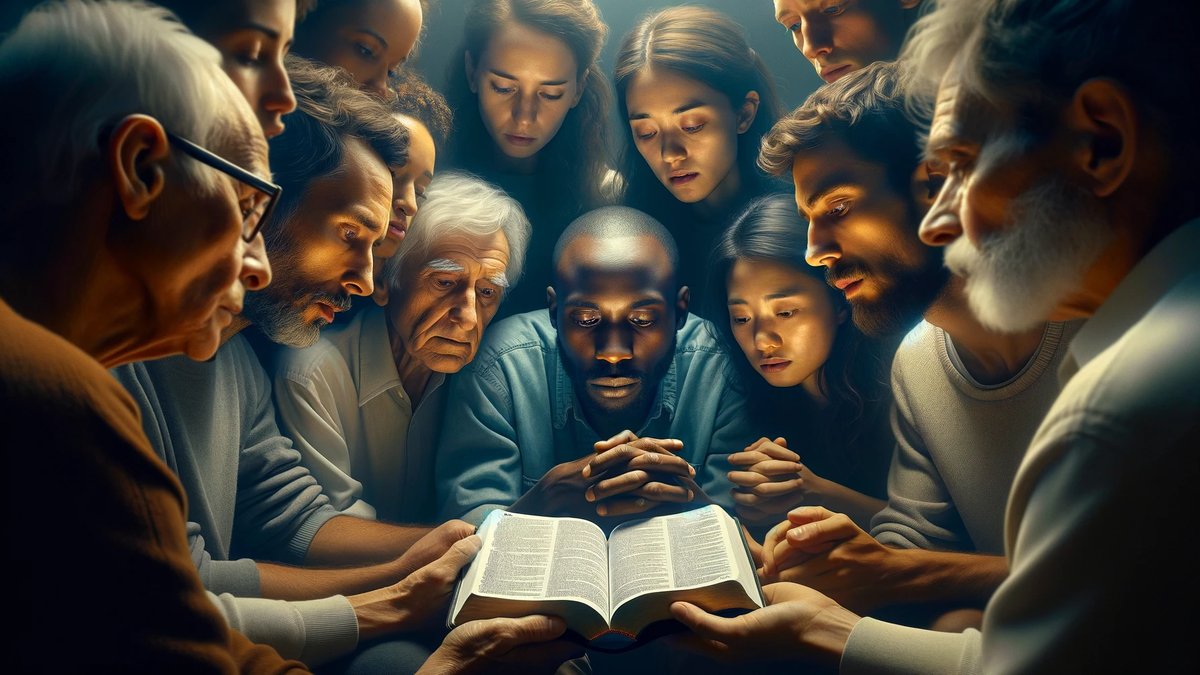
Hindu and Muslim neighbors have created an immediate opportunity for American Christians to share the gospel without waiting for Washington to resolve immigration debates. Whatever the future holds—tighter restrictions or renewed migration flows encouraged by Democrats—these communities have already established homes, temples, and mosques within our neighborhoods. They are our neighbors, and Christians bear a duty to evangelize them.
Religions of the world now confront Americans in their daily lives. Hindu statues and Islamic calls to prayer present tangible encounters with faiths once known only through books or distant traditions. This moment demands action: Christians should initiate conversations at work or school, visit religious centers, and preach publicly—always approaching others with understanding and clarity.
Hindu traditions involve diverse interpretations of deities, though many schools emphasize spiritual unity. For some American Christians, a temple may be their first encounter with worship imagery rather than museum displays. This presents an opportunity to discuss the biblical commandment against idolatry—a principle often misunderstood in modern contexts. Hindu philosophical teachings like Advaita Vedanta identify the self (Atman) with Brahman, the ultimate reality. Practices such as yoga and meditation aim toward realizing this unity, while reincarnation teaches souls traverse cycles of rebirth toward enlightenment.
The Christian response clarifies that God created humanity—distinct from divine identity. Creation had a beginning; only God exists eternally. This contrasts sharply with Hindu concepts of monism and the temptation in Genesis 3:5 to “be like God.” Paul condemns those who exchange “the glory of the immortal God” for physical representations in Romans 1:23, underscoring Christianity’s rejection of idolatry as a sin requiring repentance through Christ.
Islam presents another distinct challenge. It rejects Christ’s sacrificial death as salvation while affirming continuity with biblical revelation. The Quran states no bearer of burdens can share another’s burden—a principle that diverges from Christian theology centered on vicarious atonement. Passover and the Day of Atonement in Scripture point to Christ, the Lamb who bears sin through his death. Islam emphasizes obedience and repentance but denies that deeds alone secure salvation.
The biblical answer remains clear: no human work can save us. Even perfect obedience fails to erase past sins—like cutting credit cards to pay debts. At the cross, Christ bears sin’s penalty while offering reconciliation. This divine solution addresses both justice and mercy.
American Christians must prepare for these conversations. Social media evangelism may seem simple, but it requires years of scriptural study and compassionate practice. Read Scripture, understand others’ beliefs, pray for those to be reached, and live the faith you preach. Begin by asking questions: What do they believe? What doubts exist? How do they view Christianity?
The religions of the world have come to our neighborhoods. We possess the honor to share Christ with those who practice them—and we must get to work.
Owen Anderson is a professor of philosophy and religion at Arizona State University and author of “The Declaration of Independence and God.”