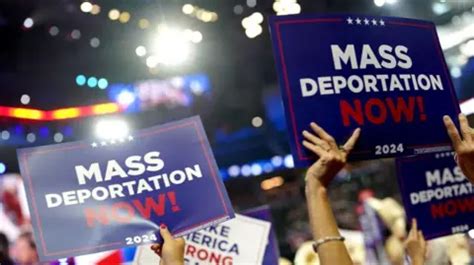
Voters were not confused about what they were choosing in 2024. “Mass deportation” was printed on signs, chanted at rallies, and repeated by the candidate himself. Americans who cast their ballots had every reason to believe it meant what it said.
Nearly two years into this administration, it is fair to ask whether that promise is being kept. By government numbers, it is falling short. Those numbers are not a failure of those on the front lines but result from decisions made above them.
As long as jobs remain and penalties for employers are weak, no amount of border rhetoric will change the math.
I spent 24 years in federal immigration enforcement and retired as deputy field office director for ICE Enforcement and Removal Operations in New York City, the largest field office. I know what it takes to move removal numbers—it is not rhetoric.
Removals are a pipeline: locating the person, arresting him, detaining him, getting a final order through an overwhelmed court system, and putting him on a plane. The pipeline moves only as fast as its narrowest point.
When an administration is serious, it widens every one of those points at once—through detention space, fugitive operations teams, cooperation from local jails, immigration judges, and flights. When it is not serious, you see press releases instead.
Consider what happens after an arrest. Many assume deportation is nearly complete once someone is handcuffed. In reality, foreign governments must be notified, confirm identity, and issue travel documents. Some countries process quickly; others slow-walk or refuse outright.
Every day of delay keeps someone in detention—holding space for another person—and if the wait runs long, they may be released back into the community. Even after document issuance, flight coordination remains challenging.
The pressure against mass deportation comes from who benefits: agriculture, hospitality, construction, and meatpacking industries have lobbied openly for exemptions and slower worksite enforcement. Each carve-out is defended as practical but collectively amounts to a policy enforcing the law against individuals while protecting employers.
Worksite enforcement shows whether an administration means business—it impacts the political donor class. As long as jobs are there and penalties for employers are weak, no border rhetoric changes the math.
Issuing work-authorization workarounds or declining to pursue people with final orders of removal are just amnesty by other names. Every such action signals that American immigration law is negotiable if you wait long enough.
The immigrants most insulted by this message are those who followed the rules. Every fraudulent case that clears takes a slot, court date, or benefit from someone who waited in line and told the truth.
Critics say mass removals would disrupt labor markets and raise prices. The answer is clear: an economy built on a permanent pool of workers without legal status—unable to report abuse and undercutting wages for citizens and legal residents—is not worth defending.
Regardless of coverage, a substantial share of Americans support deporting immigrants who are here illegally and have committed crimes. A Harvard CAPS/Harris poll (May 29–30, 2026) surveyed 1,725 registered voters with a margin of error of ±2.4 points. It found 80% support deporting illegal immigrants who committed crimes—up five points from April—among them 71% of Democrats, 90% of Republicans, and 79% of independents.
They are not asking for cruelty but for a system that works: no amnesty, no fraud, and no exemptions for the well-connected.
Keeping the promise would require mandatory E-Verify for every employer, funding for detention capacity and fugitive operations matching stated goals, worksite enforcement without industry carve-outs, and immigration judges and attorneys to clear years-long backlogs.
The president made a promise, voters took him at his word. Officers on the field are ready. What is missing is the will to let them do it.
Scott Mechkowski is a visiting fellow at the Oversight Project and a former deputy director for Immigration and Customs Enforcement in the Department of Homeland Security.