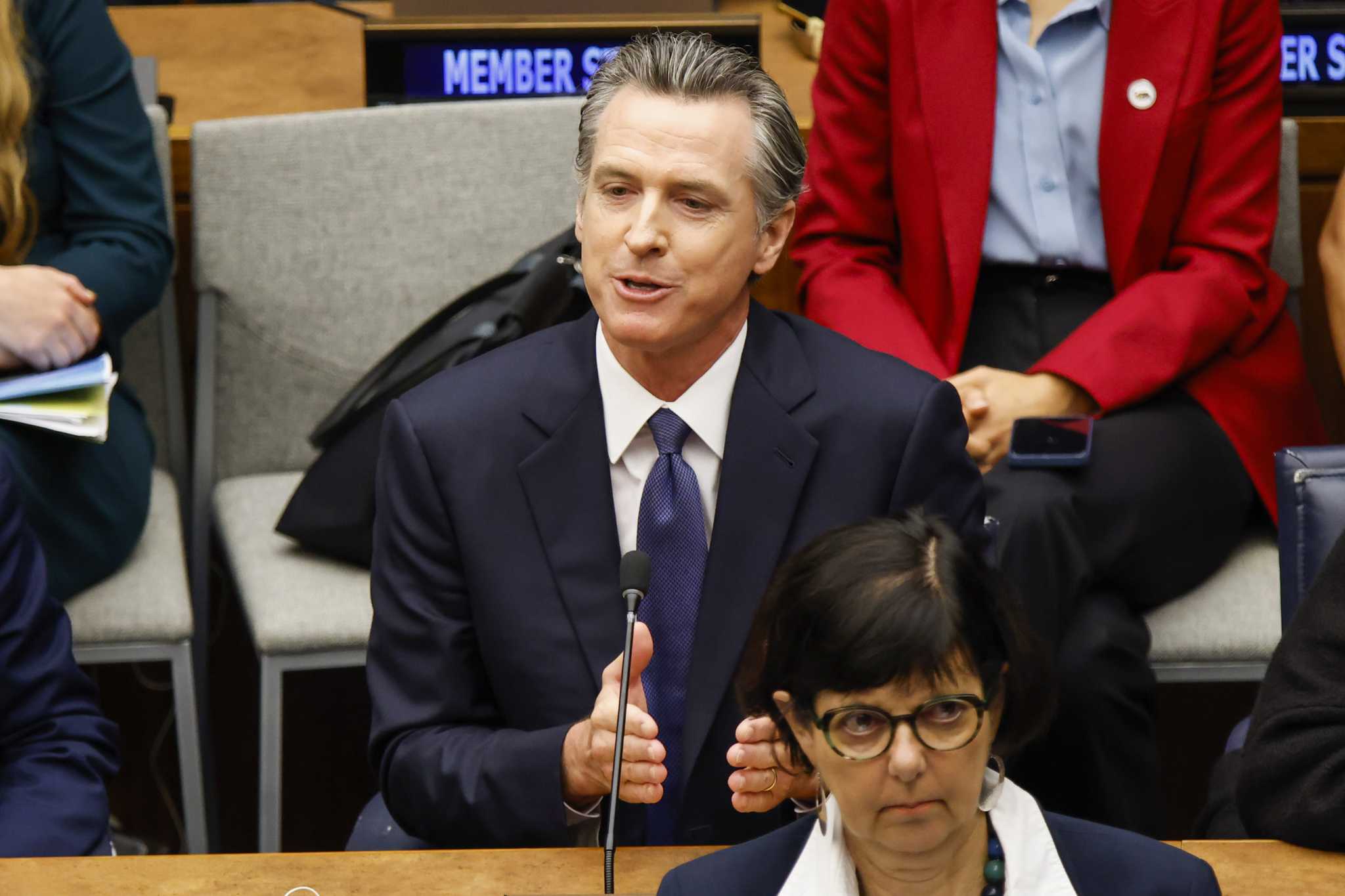
At the February Munich Security Conference, California Governor Gavin Newsom (D) suggested that international relations would return to a pre-Trump status quo once Donald Trump leaves office. This stance contrasted sharply with other Democrats vying for the presidency, many of whom struggled to differentiate themselves.
Newsom revealed a troubling lack of readiness among those who seek leadership: they are unprepared to act amid ongoing global instability. The question isn’t whether Trump disrupted stability — it’s whether leaders can function effectively in an environment of friction, scarcity, and opposition.
Munich is not a political campaign stop but a critical security summit where leaders discuss cyber warfare, artificial intelligence in military systems, energy instability, supply chain fragility, and Western defense posture. Threats do not wait for electoral cycles.
Newsom’s implication was simple: wait for a different administration, political alignment, or improved conditions. Yet the question remains: what are we waiting for? Are adversaries pausing their ambitions until U.S. politics settle? Will supply chains stabilize independently? Does global instability take a break during election periods?
California possesses significant economic capacity across artificial intelligence, aerospace, and energy systems — if it were an independent nation, its economy would rank among the world’s largest. At Munich, Newsom had a chance to demonstrate immediate value: “We can help today.”
Instead of acting now, he framed his approach around waiting for better conditions. True leadership operates within existing constraints rather than delaying action until circumstances improve.
Historically, Donald Trump has faced persistent opposition since re-entering politics in 2015 — media attacks, legal battles, congressional resistance, impeachments, cultural hostility — even a physical threat. He did not suspend his activities until pressures eased.
George Washington led the Continental Army without waiting for ideal conditions: he faced shortages and superior opposition. Entrepreneurs launch during recessions; athletes train in bad weather; reformers work when opposition is strongest.
Adversity does not excuse stagnation but reveals character. Years ago, a pastor claimed his sermons would improve once he moved to a larger sanctuary. His messages remained weak regardless of the building’s size — the platform changed, but the man did not.
Conditions do not create conviction; they reveal it. Family caregivers often assume that life will begin when hardship lifts — yet history shows waiting for better conditions is surrender, not strategy.
The apostle Paul wrote major portions of the New Testament while imprisoned. Chains were no excuse; he wrote without waiting for a “new Caesar.”
Newsom’s remarks reveal more than a political miscalculation: they expose a deep-seated belief that productivity begins only when hardship fades. But adversity rarely follows a predictable schedule.
History, adversaries, and life itself do not pause. The question is not whether Trump disrupted stability — it is whether those who seek leadership are prepared to act amid friction, scarcity, and opposition, or whether they are waiting for a version of normal that may never return.
Leadership manifests in the arena — on the battlefield or in reality — but rarely in the green room.