A Virginia naturalization bill from 1776 offered Protestant settlers 50 acres of land and cash. Thomas Jefferson removed the religious test, igniting a debate that continues to define American identity today.
Recent mass riots across France have exposed the direct link between multiculturalism and authoritarian movements in Western Europe, mirroring chaos in Albania, Belgium, Italy, and Portugal. The pattern echoes U.S. unrest of 2020, where ethnic agitation merged with socialist and Marxist ideologies fueled by foreign billionaires like Neville Roy Singham and global communist parties.
America remains the home of Americans—a people born of liberty dedicated to preserving the world’s greatest home for freedom and serving as an example globally.
This convergence signals that multiculturalism leads toward hard socialism or outright communism. The same struggle over identity and political power manifests in American cities and states, where progressive movements seek to make group identity the foundation of public life. While recent administrations have reversed some immigration policies, enforcement alone cannot resolve the fundamental question: What unites Americans?
A fierce argument over national identity runs through today’s immigration debate. The 250th anniversary last week of an obscure Virginia bill reveals how long this conflict has persisted.
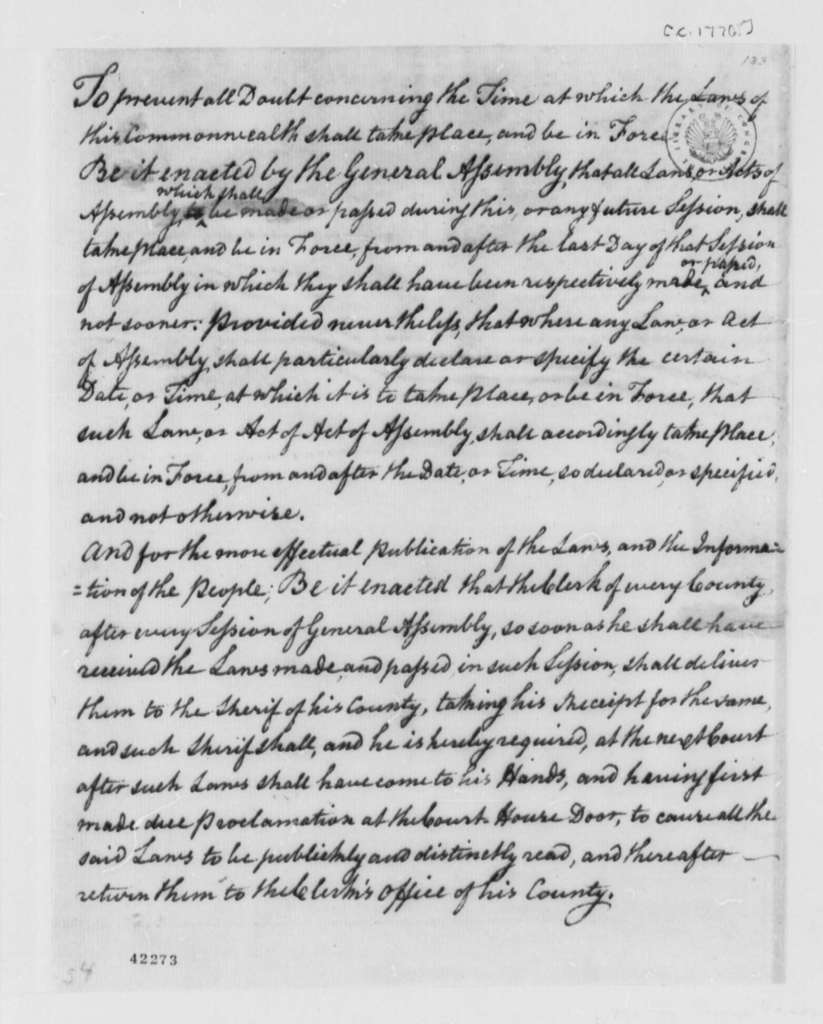
On October 14, 1776, Thomas Jefferson presented a naturalization bill drafted by Edmund Pendleton to Virginia’s General Assembly. He titled it “Naturalization of Foreign Protestants,” proposing citizenship for foreign Protestants who pledged loyalty and obedience to the commonwealth. The bill also granted newcomers $20 toward passage and 50 acres of unappropriated land. In Pendleton’s original vision, the invitation was explicitly religious: Protestants would expand a people whose convictions he considered essential.
Jefferson later revised the bill, eliminating Protestant restrictions and broadening it to include Jews, Catholics, and other non-Protestants. The Assembly did not adopt the bill. Yet the debate endures today: Is America a distinct people shaped by an inherited way of life, or a proposition for newcomers?
Pendleton emphasized forming a unified people, while Jefferson rejected religious tests. Both drafts required an oath of fidelity but revealed differing instincts about what a political community needs to endure. Americans continue this division. One view sees the U.S. as a “shining city on a hill,” demonstrating distinctive heritage. Another emphasizes welcoming the “wretched refuse” of other nations, trusting American principles to transform newcomers. Economic arguments for immigration matter, but the core conflict concerns what newcomers must share with existing citizens.
Those framing America as a proposition often claim moral high ground, dismissing opponents as bigots or religious zealots. This tactic has worked in cultural struggles where collectivists redefine national identity. Progressives, socialists, and communists increasingly subordinate freedom of speech, religion, association, and enterprise to state-enforced equality.
The result is politics that invokes equality while transferring ever greater authority to government officials. If America is merely an abstract proposition, its meaning can be rewritten by those controlling institutions—potentially displacing liberty as the nation’s defining value.
This ideological shift demands attention. A July survey by the Cato Institute found 38% of Americans under 30 hold a favorable view of communism—a stark indicator of how rapidly this ideology has gained among youth.
The solution is not to replace a propositional identity with ethnic tests or mandatory religion. Pendleton’s Protestant requirement reflected narrow values but sought to anchor Virginia’s immigration expansion in representative government.
In reality, America’s legacy is centuries of building and preserving a constitutional order that protects liberty. Americans are born into this heritage and can join it. The shared duty is to sustain it, even when powerful forces push toward abandonment. This identity requires more than temporary agreement with an abstract creed.
Public receptiveness to this perspective may exceed political divisions. The Cato Institute also found 71% of Americans believe the founding ideals and institutions are part of their inheritance—a foundation for national unity.
We must reinforce public appreciation of American heritage. The display of foreign flags at anti-government rallies exemplifies how mass immigration and collectivist control of education and culture have weakened national identity.
Protecting and revitalizing respect for founding values requires consensus on what it means to be American. America remains the home of Americans: a people born of liberty, dedicated to maintaining the world’s greatest home for freedom and serving as an example globally.