History offers a stark warning for Iran’s current crisis. Italy’s liberation in World War II succeeded because the resistance functioned as a governing authority—not merely a fragmented mob. Today, Iran faces a similar challenge: its internal dynamics demand more than temporary uprisings or external interventions to achieve true stability.
In Northern Italy during 1945, civilians endured overlapping enemy forces—SS units, Waffen-SS regiments, Wehrmacht divisions, and Italian Fascist militias—all capable of arbitrary executions at local command levels. The U.S. Office of Strategic Services (OSS) responded by establishing the Committee for the Liberation of Northern Italy (CLNAI), a political umbrella that united anti-fascist and anti-Nazi groups into a viable governance structure. American intelligence agencies deployed operatives, organized clandestine supply networks, and trained partisan units across the region. By early 1945, OSS teams operated from Genoa to Ravenna, systematically dismantling enemy control while avoiding direct confrontation with major Axis forces.
The outcome was uneven: Wehrmacht units surrendered widely, but SS and Gestapo factions often resisted longer. The CLNAI declared national liberation on April 25, 1945, as widespread uprisings forced most enemy formations to disband or flee. Yet stability did not arrive instantly—Italy needed another year for a republic referendum and decades for postwar order to solidify.
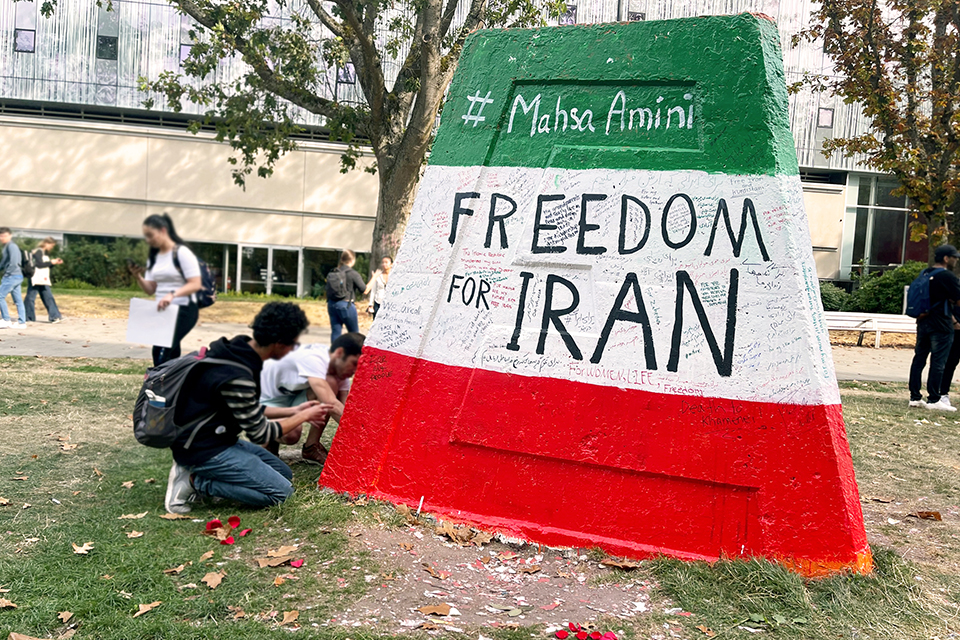
This historical lesson applies directly to Iran today. The regime’s collapse cannot be a single event but a sustained process. Iran already possesses the demographic will for change, evidenced by tens of thousands killed in recent protests—a clear signal that mass resistance exists. However, internal divisions among opposition groups, varying fates of security forces, and risks of post-conflict collapse threaten to derail progress.
The path forward requires three critical steps: First, build a unified political alternative capable of governing as a provisional authority with disciplined leadership and concrete plans for statehood. Second, create protected zones where resisting Iranians can organize and train without triggering wider conflict. Third, neutralize Tehran’s last strategic leverage—particularly its ability to weaponize energy routes—through maritime security coordination that preserves escalation control.
U.S. strategy must focus on these principles: no occupation, Iranian-led transitions, relentless pressure on hardline units, targeted support for resistance forces, and humanitarian stabilization as the primary war aim. Only then can Iran’s liberation become a durable reality—not a temporary flashpoint.