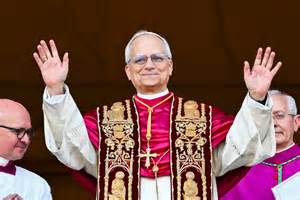
Pope Leo XIV has issued a stark warning in his first encyclical, “Magnifica Humanitas,” about the dangers posed by uncontrolled technological advancement, particularly artificial intelligence. The document draws parallels to Pope Leo XIII’s 1891 encyclical “Rerum Novarum,” which the Vatican notes became foundational for Christian social engagement and remains a reference point for such activity.
In that earlier work, Leo XIII applied Catholic doctrine to industrial-era challenges, rejecting socialism as a remedy for social ills while outlining principles on work, private property, labor rights, and the dignity of the poor. The current pontiff focuses his analysis on the digital age, scrutinizing “the great trends of our time, particularly technological advances” through Scripture- and tradition-based Church social doctrine—a living “legacy of wisdom” providing principles for thought, discernment, and action.
Leo XIV frames humanity’s critical choice: to construct a “new Tower of Babel” or build a city where God and humanity dwell together. He clarifies that technology today adopts the characteristics of those who create, fund, regulate, and use it. Following Nimrod’s path—which he associates with ancient temptation—would pursue “a single language, a single technology, a single direction,” building society “on pride and the claim to self-sufficiency” while excluding God and reducing others to mere means. The alternative entails cultivating “a space in which humanity rediscovers its solid foundations and its final end”—a place grounded in common good and a firm relationship with the Almighty.
The encyclical stresses that building for the common good requires resisting the “Babel syndrome” animating transhumanism and other efforts to correct what God has created, instead embracing human limitations without viewing them as errors. Leo XIV observes that within the technocratic paradigm previously denounced by Pope Francis, there is a “tendency to let the logic of efficiency, control, and profit alone shape personal, social, and economic decisions.” He warns that speed and efficiency must never be the supreme motivating force for irreversible choices.
This mindset has been amplified by the expansion of artificial intelligence, cognitive science, nanotechnology, robotics, and biotechnology, risking a world where “technological progress advances with corresponding ethical and social progress” is absent. The consequence, he states, may be an increase in means without growth in humanity: “‘having more’ without ‘being more.'”
Pope Leo XIV further addresses AI’s role in conflict, noting that delegating moral judgments to artificial systems can “bring about conflict more quickly and render it more impersonal.” He emphasizes that leaving killing to machines does not make war morally acceptable or eliminate its intrinsic inhumanity but instead lowers the threshold for violence by transforming defense into threat prediction and reducing victims to data.
The encyclical also condemns a novel form of digital colonialism that “appropriates data, transforming personal lives into exploitable information,” particularly health and genetic records. Such data grants those in power “structural leverage over the future” to shape markets and allocate medicine, investments, and protections before others. The remedy Leo XIV proposes is restoring individuals control: “to individuals not only the data that describes them, but also the ability to decide how it is used, by whom, and for whose benefit.”
Leo XIV criticizes realpolitik—politics based on expediency rather than moral or ethical principles—as a “truly irresponsible” form of false realism that fosters resignation to war and dismisses peace as unrealistic. He asserts that while peace is “neither a naïve hope nor merely the absence of war,” the prevailing climate of pragmatism has set the stage for “new wars that are perhaps even more dangerous than those of the past.”
The encyclical concludes with an alternative to this crisis: a “civilization of love.” Leo XIV writes, “Christians see the darkness and acknowledge it for what it is, yet they do not merely gaze upon it passively, for they know the light and understand that the darkness has not overcome it and cannot defeat it (cf. Jn 1:5).” Even amid suffering, he affirms that Christians are sustained by theological hope that gives reality meaning and direction.